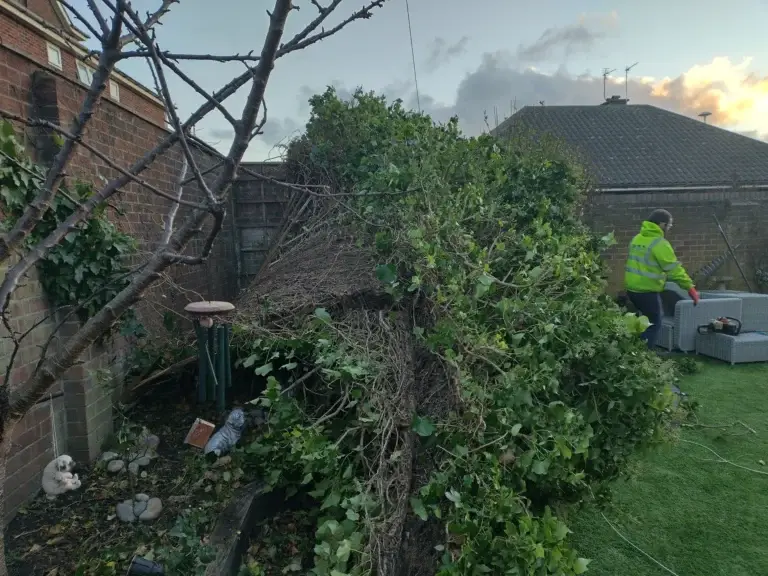
A back garden left to its own devices for years can end up with waist-high grass, brambles through the fence line, self-seeded saplings and a lawn that has long since given up. When there is no saving what is there and you want a clean slate for landscaping and re-turfing, the answer is a full garden scrape-out: a mini digger strips the whole plot back to bare soil and every bit of muck is carted away, leaving a blank canvas ready for whatever comes next.
TL;DR
- A garden scrape-out strips an overgrown plot right back to bare, level soil — vegetation, old turf, roots and rubble all removed.
- It’s the go-to when a garden is a jungle, you’re selling up, or you want a clean base before landscaping or re-turfing.
- A mini digger plus proper muck-away is generally faster than clearing by hand, and it leaves you ready to build.
- Cost depends on size, access, tip fees and what’s hiding underground.
- We’re fully insured, run our own machinery, and cover Sunderland, Durham, Washington, Seaham and Newcastle.
What a garden scrape-out actually is
A garden scrape-out is exactly what it sounds like. You take the top layer of a garden — grass, weeds, roots, old turf, and anything else growing in it — and you scrape it off, right down to clean soil. It’s more than a tidy-up. A clearance might mean cutting things back and hauling away the green waste. A scrape-out goes deeper: you remove the vegetation and the ground it’s rooted in, then level what’s left so you’ve got a proper base to work from.
Think of it as resetting the garden to zero. Whatever mess was there is gone. What you’re left with is bare earth, level and clear, waiting for the next stage — turf, patio, sleepers, a new lawn, whatever the plan is.
When you actually need one
Not every overgrown garden needs scraping back to soil. Sometimes a good clearance and a cut does the job. But there are a few situations where a full scrape-out is the right call.
The jungle garden
This is the classic case. Years of neglect, brambles woven through everything, the original lawn buried under weeds and self-seeded growth. Once a garden gets to that point, patching it up is a waste of money. The weeds and roots come straight back. Scraping it out removes the problem at the source.
Selling up
A wild back garden is one of the first things a buyer clocks, and it drags the whole viewing down. A cleared, level plot reads as low-maintenance and full of potential. It also takes far less time than a summer of your own back-breaking effort.
Before landscaping or re-turfing
This is the big one. If you’re paying a landscaper to lay a new lawn, build raised beds, or put down a patio, they need a clean, level base to start from. Laying fresh turf over old, weedy ground is a false economy — the weeds push through and you’re back to square one. A scrape-out gives the new work the foundation it needs to last.
The process, step by step
Every garden’s a bit different, but a scrape-out generally follows this order.
- Strip the vegetation. First, everything growing is cut and cleared — the overgrown grass, brambles, and anything self-seeded along the fence line. That gets the plot down to ground level so you can see exactly what you’re dealing with.
- Dig out the old turf, roots and rubble. This is where a mini digger earns its keep. The bucket peels back the old turf and the top layer of soil in one pass, lifting out root systems, buried rubble and years of dead growth that hand tools would never shift.
- Level the ground. Once the muck’s out, the soil is worked back to a level, even surface. No dips, no humps — a proper base that a landscaper or turf layer can build straight onto.
- Muck-away. All the spoil — turf, roots, soil, rubble — gets loaded out and taken off site to be disposed of properly.
- Leave a clean canvas. The finished result is bare, level soil inside a tidy fence line. Ready for the next stage, whatever that is.
One thing worth knowing: the muck-away is often the part people underestimate. A scraped garden produces a surprising amount of spoil, and it’s heavy.
Why a mini digger beats doing it by hand
You can clear a garden with a spade, a mattock and a lot of weekends. But once you’re dealing with established roots, buried rubble and a full plot of turf, hand-digging turns into a slog that eats weeks and wrecks your back.
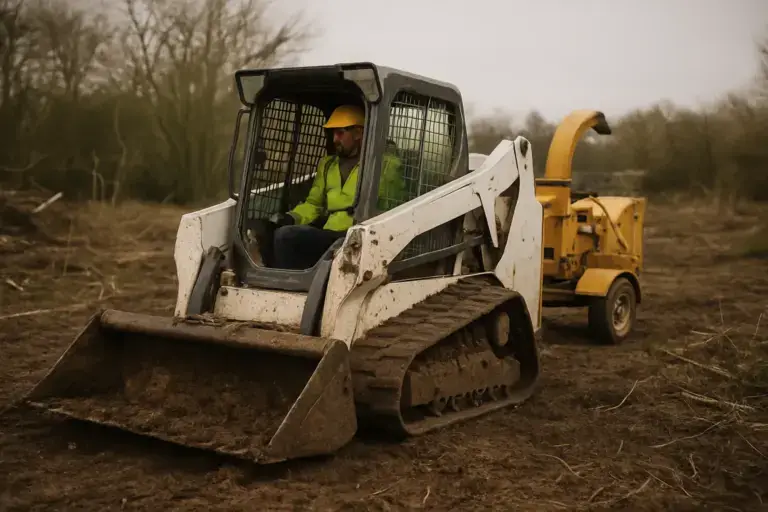
A tracked mini excavator gets through in hours what would take days by hand. It lifts out root balls whole, works to a consistent depth so the levelling is even, and its tracks spread the weight so it doesn’t churn the ground into a bog. Access is the first thing to check: a compact machine can often get down the side of a terraced or semi-detached property, but not always.
Pair the machine with a proper muck-away and the whole thing is clean, quick and finished. No mountain of green waste, no skip permit, no half-done garden sitting there for a month. It’s the same logic as bringing in a qualified professional for tree work — the right kit and the right experience save you time, money and grief. If you’re weighing up who to trust with a bigger job, our guide on how to choose a tree surgeon in Sunderland covers what to look for.
What drives the cost
We won’t quote a made-up figure here, because an honest price depends on the garden. But these are the things that move it up or down:
- Size. More square metres means more to strip, more to level and more to cart away. It’s the biggest single factor.
- Access. If the mini digger can get round the side, the job’s straightforward. Where machine access is tight, the work slows down and the price reflects it.
- Tip fees. Disposing of spoil legally costs money, and heavy soil and turf add up. It’s built into the muck-away.
- What’s underground. Old concrete, buried rubble, tree stumps or thick root systems all add time. Anything found underground is best flagged before the work goes on.
The honest answer is that we come and look, or you send photos, and we give you a real number.
What you can do with the space after
That’s the good bit. A scraped, level plot is a genuine fresh start. From here you can lay fresh turf for a proper lawn, put down a patio or decking, build raised beds for growing, gravel it for low maintenance, or hand it straight to a landscaper with a clear design in mind. Because the ground is clean and level, whatever goes down next sits right and lasts.
If part of the plan involves trees or hedges you want to keep and shape rather than remove, it’s worth doing it properly from the start — our rundown of tree pruning mistakes to avoid will save you some regret.
Thinking about a scrape-out?
If your garden’s become more jungle than lawn, or you want a clean base before landscaping, we can talk through what machinery the job needs. We’re a family-run, fully insured and qualified team, we have our own chippers, skid steers and brush mowers, and we cover Sunderland, Durham, Washington, Seaham and Newcastle. Send us a few photos or give the Sunderland office a call and we’ll give you a free, honest quote.
Frequently Asked Questions
Will a scrape-out damage the soil underneath?
The soil beneath the stripped layer stays in place, and the aim is a firm, level base to build from. If the ground has been compacted by machinery, ask your landscaper whether it needs loosening before turf or planting goes down.
How long does a garden scrape-out take?
The time depends on the size of the garden, access and how much waste has to be carted away. Ask for a timescale when you request your quote.
What if there’s rubble or old concrete buried in the garden?
Buried rubble or concrete can turn up, particularly in older properties. It needs removing and taking away separately, and tip fees apply, so tell us anything you know about the garden’s history when you ask for a quote.
Can I do a scrape-out myself with hired machinery?
You can hire a mini digger, but operating one safely takes training and experience — one wrong move costs far more in damage than you save on hire fees. Hire fees are only part of the cost, so weigh up the risk of damaging pipes, cables or a neighbour’s fence. Using a fully insured contractor is worth the peace of mind.
What’s the difference between a scrape-out and just clearing the weeds?
A clearance removes what’s growing on top; a scrape-out removes the roots, the old turf, and the soil they’re anchored in. For badly overgrown gardens, clearing alone means the weeds and brambles come straight back within weeks. A scrape-out gives you a genuine blank canvas.