Stump Grinding vs Stump Removal: Which Do You Actually Need?
Once a tree has come down, you’re left with the stump — and the question of what to do with it. Across Sunderland and the North East, we regularly see homeowners weighing up two options that sound similar but are actually quite different jobs: stump grinding and stump removal. The right choice depends on what you’re planning to do with that bit of garden next, how deep the roots go, what’s nearby, and your budget. Here’s the plain-English version of the difference, so you can make the call without being talked into work you don’t need.
- Stump grinding uses a machine to chip the stump down to 6–12 inches below ground level. Quick, neat, and right for most domestic gardens.
- Stump removal physically digs out the stump and main root plate. Slower, more disruptive, more expensive — but the only option if you’re planting another tree in the same spot or installing foundations.
- For most customers, grinding is the sensible choice. We’ll tell you straight if your situation is one of the exceptions that needs full removal.
What Stump Grinding Actually Involves
Stump grinding is the most common way of dealing with a tree stump. A specialist grinder — essentially a large rotating cutting wheel — is brought in and used to chip away at the stump, working downwards in passes until it sits well below ground level. Depending on the size of the stump and the access to the garden, the machine is either a self-propelled walk-behind unit (for tight access) or a larger tracked grinder (for bigger stumps with good access). The result is a hole filled with woodchip mulch, sitting roughly 6 to 12 inches below the surrounding ground level. You can backfill with soil, lay turf over the top, or leave it to settle and use the area for planting smaller shrubs or grass. The main root plate stays in the ground but, with the stump gone, it won’t regrow — and it’ll naturally rot down over the years without causing any structural problems.
What Full Stump Removal Involves
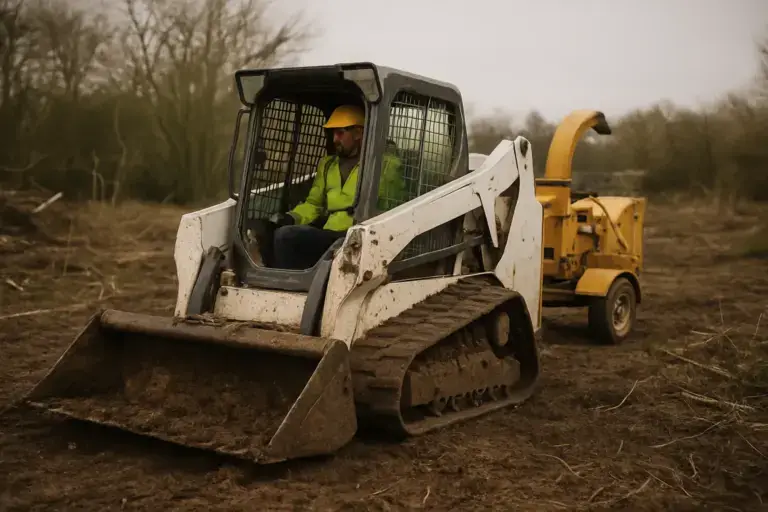
Stump removal goes further. Rather than grinding the visible stump down, the entire stump and as much of the main root system as practical is dug out — usually with a combination of hand tools, mechanical assistance, and in some cases a mini-excavator for larger trees. The job is more labour-intensive, takes longer, and leaves a much bigger hole in your garden — sometimes several feet across and deep. The hole then needs backfilling with topsoil or stone. The upside is that you’ve cleared the ground entirely. There’s no significant root mass left behind, which matters in two specific situations: when you want to replant a tree in the same spot, or when you’re planning to build, pave, or install something where the old root plate sits.
Cost — What You’re Actually Paying For
Stump grinding is typically a lot more affordable than full removal because it’s a faster job and uses one specialist machine. Smaller stumps can often be done in under an hour; even larger stumps rarely take more than half a day. Stump removal, by contrast, can involve hours of digging, machinery hire, soil delivery to backfill the hole, and disposal of root material. For a standard garden stump, you’re often looking at three or four times the cost of grinding to do full removal. We always give an upfront quote after seeing the stump in person — there are too many variables (size, species, access, what’s underground) for a meaningful number over the phone.
How Long Does the Job Actually Take?
For many homeowners, this is the practical question that decides the call. Stump grinding is usually a same-visit job — we arrive, do the work, clear up, and leave on the same trip. A single domestic stump rarely takes more than a couple of hours from start to finish, including the access protection and the tidy-up. Stump removal is a different scale of job — even a single large stump can take a full day with backfilling, and several stumps together can stretch into a multi-day visit. If you’ve got an event coming up, a builder due to start, or you just want the garden usable again quickly, grinding gets you there faster with far less disruption to the surrounding lawn.
Will the Roots Still Cause a Problem if I Grind?
One of the most common questions we get is whether the roots left behind after grinding will keep growing or cause structural issues. The honest answer for most situations is no. Once the stump is gone, the tree has no way to photosynthesise — the roots can’t regrow into a new tree because there’s nothing above ground feeding them. They simply die back and rot down over time, typically over a few years. The exceptions are species that aggressively send up suckers from roots — things like aspen, some poplars, and occasionally cherry. If you’ve had one of these down, we’ll flag it and may recommend a root treatment as part of the work, or in some cases full removal to be safe. Most species — sycamore, ash, beech, birch, conifers, fruit trees — are perfectly fine with grinding only.
When Full Removal Is Actually Worth It
For many homeowners, full removal is overkill. There are three scenarios where we’ll genuinely recommend it over grinding. The first is replanting a tree in the same spot — a new sapling won’t establish well sitting on top of an old root plate, and the ground needs clearing properly first. The second is anything structural going in over the top: an extension, conservatory, driveway, garden wall, or paving where the slowly rotting root mass underneath could cause settlement issues years down the line. The third is when an old stump is interfering with drainage, a soakaway, or underground services — sometimes the only way to deal with it cleanly is to dig the whole thing out. Outside these scenarios, full removal is usually unnecessary expense and disruption.
Access and Site Considerations
The other big factor is what’s around the stump. A grinder needs a route into the garden — most of our machines will get through a standard 90cm gate, but anything tighter requires a smaller unit or hand-clearing of access. Stumps right up against walls, fences, or buildings need careful work to avoid damage. Stumps near underground services (gas, water, electric, drains) need a check on what’s where before any digging starts. We’ll always walk the site with you before quoting, point out anything that might affect the job, and give you an honest assessment of what’s achievable. Our tree surgery and stump grinding service covers domestic and commercial work across Sunderland and the wider region — from a single garden stump to commercial clearance involving multiple trees and stumps.
Got a Stump You Want Dealt With?
We’ll come and look at the job, give you a free quote, and tell you honestly whether grinding or removal is the right choice for your situation. No pressure, no upsell — just straight advice.
Request a Free Quote