Storm-Damaged Tree in Sunderland? What to Do (and Who Pays)
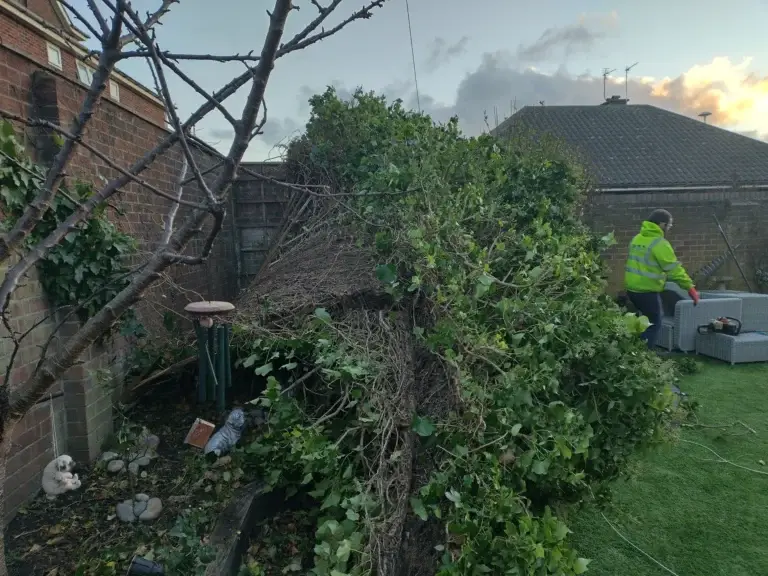
A storm damaged tree in Sunderland can go from a nuisance to a genuine danger in the space of one bad night. Think of a leaning conifer over a conservatory, a split sycamore hanging over the road, a whole leylandii down across a driveway after a named storm has rolled in off the North Sea. This guide walks you through what to do first, what counts as a real emergency, and how the insurance side actually works when you’ve a storm damaged tree on your hands.
- Stay well clear of leaning trees, hanging limbs, and any branch near power lines — call 105 free for cables.
- Don’t attempt large limbs or a partly-fallen tree yourself; it’s the most dangerous tree work there is.
- Buildings insurance usually covers storm tree damage to your home; liability for a neighbour’s fallen tree turns on negligence, not who owns it.
First Thing: Keep Everyone Clear
Before you do anything else, get people and pets away from the tree and stay out from under it. A tree that’s already failed in a storm is unpredictable — branches that look settled are often under huge tension or sitting on a hidden break, and they can spring or drop without warning. Don’t stand underneath to take photos, and don’t let children near it.
Three things make a storm-damaged tree especially dangerous: a fresh lean (the root plate may be lifting), limbs hung up in the canopy rather than fully down, and any contact with overhead cables. If a tree or branch is touching, leaning on, or has brought down a power line, treat the line as live and lethal. Keep well away from it, keep others back, and call 105 — the free national number that connects you straight to your local network operator. Don’t try to move the branch yourself, even with a pole.
What Actually Counts as a Tree Emergency
Not every bit of storm damage needs a same-day call-out, and it helps to know the difference so you’re not paying emergency rates for something that can wait a week. A genuine emergency is anything posing an immediate risk to people, traffic, or property: a tree leaning onto a house or over a public footpath, a large limb hung up above where people walk or park, a trunk blocking a road, or any tree fouling a power line or blocking an escape route from a building.
What can usually wait for a normal booking: a snapped branch sitting harmlessly on the lawn, deadwood brought down into an empty corner of the garden, or a tree that’s lost some smaller limbs but is otherwise stable and well away from anything. If you’re not sure which category you’re in, send us a couple of photos from a safe distance and we’ll advise on next steps.
Please Don’t Tackle the Big Stuff Yourself
We understand the urge to get out there with a saw and clear it — but storm-damaged trees are dangerous work. Wind-thrown and partly-fallen trees are full of stored tension. Cut the wrong limb, or cut it in the wrong order, and the whole thing can roll, kick back, or snap towards you in an instant.
Clearing small, loose debris that’s already on the ground and nowhere near a cable is fine. But anything that’s still standing, leaning, hung up, or under load should be left to a qualified tree surgeon with the kit and training to release that tension safely. There’s no shame in waiting a few hours for the right person — it’s far cheaper than an A&E visit or a botched cut that drops a limb through your roof.
Who Pays? How Insurance Works After a Storm
This is the question we hear most once the immediate danger has passed. In broad terms: damage a storm-felled tree does to your own property — roof, fence, conservatory, car — is normally covered under your buildings insurance (and your motor policy for the car), subject to your excess. The cost of actually removing the fallen tree is sometimes covered too, but only where it’s caused damage; clearing a tree that simply blew down in an open garden without hitting anything is often not covered, so always check your policy wording.
For a neighbour’s tree that falls onto your property, this is the bit people get wrong: ownership doesn’t automatically mean liability. If the tree was healthy and a freak storm brought it down, that’s usually treated as an act of nature — your own buildings insurer handles the repair, and your neighbour generally isn’t at fault. Your neighbour only becomes liable if the tree was visibly dangerous, they’d been told, and they did nothing about it. That’s exactly why a documented inspection matters: it shows whether a risk was known. If you’re worried about a neighbouring tree, raise it in writing now, before the next storm.
Whichever way your claim falls, take dated photos before anyone touches the tree, and keep any invoice and written assessment, because insurers want evidence of what happened and that the work was done by a professional. Our work to make a storm-damaged tree safe is covered by our tree surgery services.
Make Safe Now, Full Removal Later
A lot of storm work splits into two stages, and that often suits everyone. The priority is to make safe — release the dangerous tension, take down hung-up limbs, get the tree off the structure or out of the road, and leave it stable. That’s the urgent bit, and it’s what an emergency call-out is for. Once nobody’s at risk, the full removal, stump grinding, or any tidy-up can be booked in as a normal job, often once your insurer has had a look and given the go-ahead.
If you’ve a large tree in an exposed spot, a quick inspection before storm season is a cheap bit of insurance against a 2am emergency.
Frequently Asked Questions
Who is responsible if my neighbour’s tree falls on my house in a storm?
If the tree was healthy and a storm brought it down, it’s usually treated as an act of nature — your own buildings insurance covers the repair and your neighbour generally isn’t liable. They only become responsible if the tree was clearly dangerous, they’d been warned, and they failed to act. That’s why it’s worth raising any concern about a neighbouring tree in writing, so there’s a record if it ever fails.
Does home insurance cover storm-damaged tree removal?
Generally, yes — where the tree has damaged your property, buildings insurance usually covers both the repair and the removal of the fallen tree, subject to your excess. Where a tree has simply blown down in the garden without hitting anything, removal often isn’t covered. Always check your specific policy wording, and keep dated photos and a professional invoice for any claim.
What number do I call if a tree has hit a power line?
Call 105. It’s the free national number that connects you to your local electricity network operator for power cuts and damaged lines, including trees fouling cables. Treat any line in contact with a tree as live and dangerous, keep everyone well back, and never attempt to move the branch yourself — wait for the network to make it safe before any tree work begins.
How quickly can you respond to a storm-damaged tree in Sunderland?
For genuine emergencies, such as a tree on a house, blocking a road or threatening people, we aim to respond quickly, depending on workload and site access. Call us directly to talk through the situation and we’ll advise on availability and response time.
Storm-Damaged Tree That Needs Sorting?
Call us for an emergency call-out, or send a photo and we’ll advise on next steps. Local team, 40+ years of experience, fully insured, no obligation.