Commercial Tree Services: What ‘Safe’ Looks Like on a Busy Site
Commercial tree services on occupied or active sites carry a different risk profile to residential work — and the standards applied need to reflect that. When tree surgery or tree removal is happening alongside other trades, near public access points, or adjacent to live infrastructure, the planning behind the job matters as much as the technical skill of the operatives carrying it out. For facilities managers, site managers, and contractors commissioning tree work across the North East, this is what safe looks like in practice.
The Risk Profile Is Different on Commercial Sites
On a domestic property, tree surgery typically involves one crew, one client, and a controlled garden environment. On a commercial site — whether that’s a business park, a housing development, a school, a hospital, or an industrial estate — the variables multiply. Other contractors may be working in adjacent areas. Public access routes may run close to the work zone. Overhead lines, CCTV infrastructure, vehicle movements, and third-party liabilities all add complexity. A tree contractor operating on a commercial site needs to have assessed these factors before a single cut is made — not on the day, not during the job, but at planning stage. The consequence of inadequate planning on a commercial site isn’t just a near-miss; it’s a reportable incident, a programme delay, and potentially a significant insurance or legal liability for the commissioning party.
What Safe Planning Looks Like Before Work Starts
Professional commercial tree services should always include a documented pre-work planning stage. This covers a site-specific risk assessment, method statement, and RAMS (Risk Assessment and Method Statement) produced before mobilisation — not a generic document pulled from a folder, but one that reflects the actual conditions on your site. It should identify exclusion zones around the work area, confirm traffic management requirements, establish communication protocols with your site team, and account for any specific constraints such as overhead service lines, proximity to occupied buildings, or working adjacent to active roadways. If a tree contractor cannot provide site-specific RAMS before starting, that’s a significant red flag regardless of their quoted price. On commercial contracts, the commissioning party carries responsibility for ensuring the contractor is competent and that safe systems of work are in place — a generic method statement doesn’t cover that.
Exclusion Zones and Traffic Management
One of the most common areas where commercial tree work is under-managed is the establishment and enforcement of exclusion zones. An exclusion zone isn’t just a cone and a bit of tape — it needs to account for the full drop zone of any section of tree being removed, with appropriate clearance added for unexpected movement during felling or rigging. On sites with vehicle movements, pedestrian access, or proximity to other structures, this zone needs to be formally agreed and physically enforced for the duration of the operation. Where the work affects a public highway or a privately managed road with through-traffic, a Traffic Management Plan may be required — either a simple signage arrangement or a full lane closure with banksmen, depending on the volume and speed of traffic passing. This needs to be scoped and costed before the job starts, not treated as an afterthought on the day.
Communication Between the Tree Contractor and Your Site Team
On a busy commercial site, poor communication between a tree contractor and the wider site team is one of the most consistent causes of safety incidents and avoidable delays. The tree contractor should have a named point of contact on your site before work begins. Daily start and finish briefings, or a shared site induction process, should mean every operative on site is aware of where tree work is happening and what access restrictions are in place. If conditions change mid-job — another trade needs access through the exclusion zone, weather deteriorates, or an unforeseen hazard is identified — there should be a clear process for pausing work and escalating the decision. A professional contractor working under a proper method statement will have this built into their system of work. If they’re winging it, your site is carrying the risk.
Commercial Tree Surgery and Clearance Across the North East
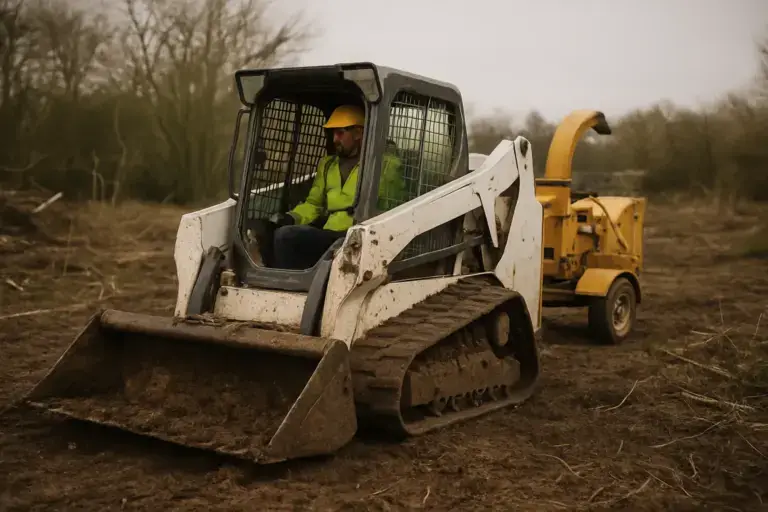
DB Tree & Garden provides commercial tree services across Sunderland, Durham, Newcastle, and the wider North East — covering tree surgery, crown work, deadwood removal, tree removal, and stump grinding on commercial sites of all types. For larger vegetation and land clearance programmes, our large-scale site clearance service handles full-scale operations with own-fleet plant machinery. All work is carried out to a professional standard, with site-specific RAMS, full insurance, and qualified operatives on every job. We’ve been doing this for over 40 years and we turn up when we say we will — on a commercial programme, that reliability matters.
Need Commercial Tree Work Managed Properly in the North East?
Book a site visit — we’ll assess the job, confirm what’s needed, and give you a clear, fixed quote.
Request a Free Quote