Hedge Cutting for Estates: How to Keep Boundaries Neat Year-Round
Getting hedge cutting services booked at the right time of year is the difference between boundaries that look sharp and managed, and ones that look overgrown by the time the work is actually done. Whether you’re a homeowner with a boundary hedge that’s getting away from you, or a facilities manager responsible for maintaining hedges across an estate or commercial site, the timing and frequency of cuts matters more than most people realise — not just for appearance, but for the long-term health and structure of the hedge.
- Don’t cut hedges between March and August without checking for nesting birds first — it’s a legal requirement, not just good practice.
- Most hedges benefit from two cuts per year: one in late winter before growth begins, and one in late summer once new growth has hardened off.
- If a hedge has been neglected for several years, a single hard-reduction cut with professional equipment will reset it — but timing that correctly is important.
When Not to Cut — The Nesting Bird Rule
This is the most important thing to know before booking hedge cutting at any time between March and August. Under the Wildlife and Countryside Act 1981, it is a criminal offence to damage or destroy an active bird’s nest. Hedges are one of the most common nesting habitats for species including sparrows, blackbirds, robins, finches, and wrens. The nesting season runs broadly from March through to August — but it’s not absolute, and it varies by species and by year depending on weather conditions. The legal position is that you are responsible for checking before cutting. A qualified and experienced hedge contractor should assess for active nesting before commencing any work during this window. In practice, this means that for commercial sites and housing associations with regular maintenance requirements, scheduling the bulk of hedge cutting outside this window — ideally September to February — removes the legal risk entirely and is far simpler to manage. We regularly advise estate clients across the North East to build their annual maintenance schedules around this constraint.
The Year-Round Hedge Cutting Schedule
For most hedges in the North East, a two-cut-per-year programme gives the best results: one cut between late January and early March, before new growth begins and before the bird nesting risk escalates, and a second cut in late August or September once the main flush of growth from spring has hardened off. The winter cut tidies the hedge and sets the framework for the growing season. The late summer cut removes the year’s new growth and keeps the boundary looking sharp through autumn and into winter. For formal hedges — box, yew, and tightly clipped privet in particular — three cuts per year may be needed to maintain the level of neatness expected. For more informal mixed native hedging, a single annual cut in late winter is often sufficient. The species in your hedge, its current condition, and the standard expected all affect the right frequency. If you’re not sure, that’s worth a brief conversation with a contractor who can look at it and give you a practical recommendation.
Managing Overgrown or Neglected Hedges
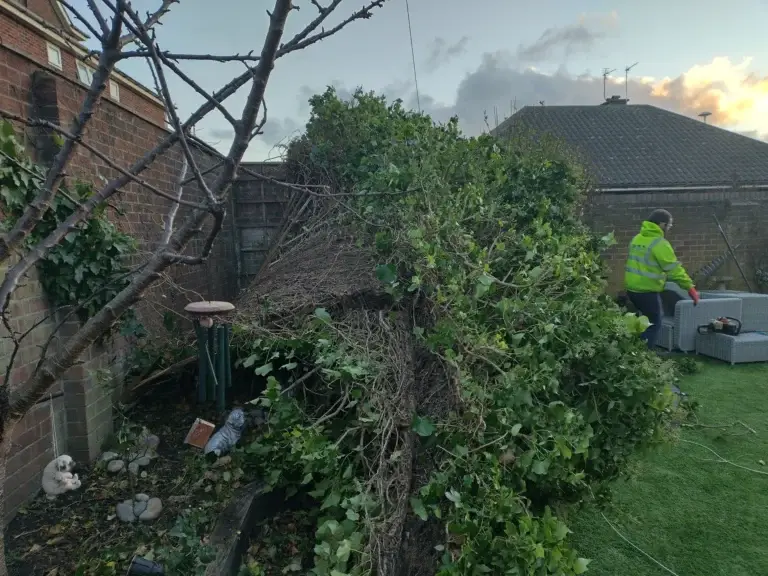
Hedges that haven’t been cut for several years — or that have been cut inconsistently — can present a different challenge. The temptation is to take them back hard in one go and start from scratch. In many cases that’s the right approach, but timing it correctly is critical. Most deciduous hedging species will regenerate well from a hard cut back to the main framework, but this is best done in late winter (February to early March) when the hedge is dormant and before the energy of spring growth kicks in. Cutting back severely in summer stresses the plant and leaves it exposed during the growing season. Evergreen species like laurel and leylandii need more careful management — leylandii in particular will not regenerate from old wood, so the approach is different. If you’ve got a hedge that’s significantly out of shape or out of control, we’ll tell you honestly whether it can be brought back and what that realistically involves, or whether replacement is the more practical answer.
Hedge Cutting for Estates, Housing Sites, and Commercial Properties
For facilities managers and property teams responsible for hedge maintenance across multiple sites or larger estates in Sunderland, Durham, Washington, and the surrounding areas, a programmed approach is far more cost-effective than reactive booking. We carry out regular hedge cutting contracts for housing associations, commercial estates, schools, and councils — working to an agreed schedule that keeps boundaries consistently maintained without the gaps that lead to overgrowth and harder, more expensive remediation cuts. Our hedge cutting and tree surgery services cover everything from domestic boundary hedges to large-scale commercial perimeter maintenance. If you’d like to discuss a maintenance programme or just get a quote for a one-off cut, get in touch and we’ll come and have a look.
Need a Reliable Hedge Cutting Service in the North East?
One-off cuts or ongoing maintenance programmes — we’ll give you a free quote and a straight answer on what your hedges need.
Request a Free Quote