Waterlogged Garden? How Flooding Damages Trees and How to Save Them
A waterlogged garden does more damage to your trees than most people realise, and it often happens out of sight, below ground, weeks before the tree starts to look unwell. Across Sunderland and the North East, slow-draining soils, low-lying plots and wet winters can leave roots sitting in standing water for far too long. This guide explains what waterlogging actually does to a tree, how to spot a tree in trouble, and what can be done to save it before it becomes a hazard.
- Waterlogged soil starves roots of oxygen, killing fine roots and opening the door to root rot and Phytophthora.
- Early signs are yellowing leaves, early autumn colour, dieback in the crown, and soft or sour-smelling soil.
- A tree whose roots have rotted can become a falling hazard even while it still looks green on top — get it assessed.
What Waterlogging Does to a Tree’s Roots
Roots need oxygen just as much as they need water. In healthy soil, air sits in the gaps between soil particles, and the fine feeder roots draw oxygen from it. When the ground floods or stays saturated for long spells, water fills those gaps and pushes the air out. Within days, the fine roots begin to suffocate and die back. This is oxygen starvation, and it’s the root of nearly every problem a waterlogged tree develops.
Once those feeder roots are gone, the tree can’t take up water or nutrients properly — which is why, cruelly, a waterlogged tree often shows the same wilting and yellowing you’d expect from drought. Worse, the dying roots and airless, soggy conditions are perfect for root rot and for Phytophthora, a water-borne pathogen that attacks roots and the base of the trunk. Phytophthora spreads in saturated soil and can seriously weaken or kill a tree, so persistent waterlogging isn’t just a temporary inconvenience — it sets off a chain of decay.
Signs Your Tree Is Struggling with Wet Ground
Because the damage starts underground, you have to read the signs the tree gives you above ground. The earliest is usually the foliage: leaves yellowing out of season, looking sparse or undersized, or the whole tree colouring up and dropping its leaves weeks earlier than normal in autumn. You may also see dieback starting at the tips of branches in the upper crown and working inward — a classic sign the roots can no longer support the full canopy.
Down at the base, look for ground that stays squelchy long after rain, moss spreading across the soil and lower trunk, or a sour, stagnant smell when you dig in. Dark, sunken, or weeping patches of bark at the base (sometimes with a rust-coloured ooze) can indicate Phytophthora and are a serious red flag. If you can rock the tree slightly and the soil heaves around the base, the root plate may already be compromised — that’s the point where a waterlogged tree stops being just an unhealthy tree and starts being a safety question.
Which Trees Cope, and Which Really Don’t
Some species are built for wet feet and shrug off seasonal flooding. Willows, alders, and poplars naturally grow along riverbanks and in damp ground, and most native birches tolerate it reasonably well. If you’ve a damp corner and want to plant into it, those are sensible choices. They’ll still suffer if the water never drains at all, but they cope far better with the wet North East winters than most.
The species that hate waterlogging are the ones to keep an eye on: beech, most cherries and other ornamental fruit trees, pines, yew, and many conifers including leylandii. These resent standing water and can decline quickly once their roots are sitting in it. If you’ve one of these on heavy clay or in a low spot that floods, it’s worth being proactive — by the time the crown looks bad, a lot of the root damage is already done.
Drainage and Aeration: How to Help a Waterlogged Tree
If a tree is showing early stress but the structure is still sound, there’s often a real chance of saving it — and it comes down to getting air and drainage back to the roots. The single biggest help is improving how the water leaves: clearing blocked drains and gulleys, easing compaction with vertical aeration (spiking or hollow-tining the area over the root zone), and where the ground is genuinely a sump, looking at land drainage or a soakaway to take the water away.
A few practical don’ts: resist the urge to keep watering a wilting tree — if the soil’s already saturated, you’ll make it worse, not better. Don’t pile mulch right up against the trunk, as that traps moisture against the bark and invites rot; keep a clear collar. And don’t add a load of topsoil over the roots to “level it off” — raising the soil level smothers the very roots that are already gasping for air. On the worst clay plots, the honest answer is sometimes that the spot will never suit a thirsty species, and a switch to a tolerant tree makes more sense long term.
When a Waterlogged Tree Becomes a Falling Hazard
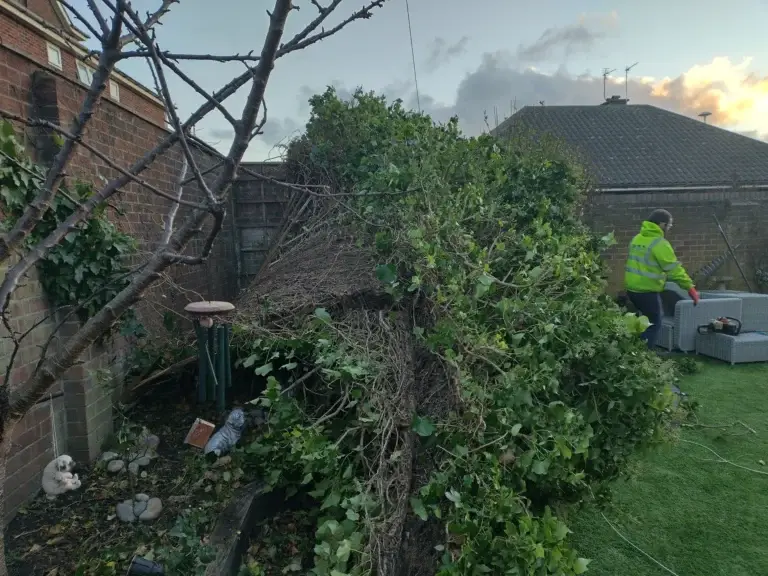
This is the part that catches people out. A tree can keep a green, leafy crown for a season or two while its root plate quietly rots away beneath it. The anchor fails before the top shows it. That’s why waterlogged trees can be more prone to wind-throw — a gust that a healthy tree would ride out is enough to tip one whose roots have rotted, because there’s nothing solid left holding it in the ground.
The warning signs are root heave or lifted, cracked soil on one side of the base, a new or worsening lean, or a tree that visibly moves at the base in wind. Any of those near a house, drive, or boundary should be looked at promptly. If you’re not sure whether your tree is merely stressed or genuinely unstable, that’s exactly the call to make — our tree surgery team can carry out a proper inspection, tell you whether it’s salvageable, and handle safe removal if the roots have gone too far.
Frequently Asked Questions
Can a waterlogged tree recover?
Often, yes — if the structure is still sound and you tackle the cause. Improving drainage, aerating compacted soil over the root zone, and easing off any extra watering gives the fine roots a chance to regrow once the ground dries out. Recovery takes time, sometimes a full growing season or two. But if root rot or Phytophthora has already taken hold of the main roots, recovery is much less likely and removal may be the safer call.
How do I know if my tree has root rot from flooding?
Look for a combination: yellowing or early-dropping leaves, dieback in the crown, soft or peeling bark at the base, a sour smell in the soil, and sometimes a dark, weeping patch at the trunk base. The most serious sign is movement — if the soil heaves or the tree rocks at the base, the root plate is failing. Root rot is hard to confirm by eye alone, so if you suspect it, get a tree surgeon to assess the root collar.
Why does my garden flood so easily in the North East?
Gardens on heavy clay subsoil drain very slowly, so water has nowhere to go and sits on or near the surface. Add a low-lying plot, compacted ground, or blocked drainage and you’ve a recipe for standing water every wet winter. Aerating the soil, clearing drains, and in some cases installing land drainage all help; choosing trees that tolerate wet ground avoids the problem in the first place.
Should I remove a tree damaged by flooding?
Not always. A stressed but structurally sound tree can often be saved with better drainage and aeration. Removal becomes the right answer when the roots have rotted to the point the tree is unstable — leaning, moving at the base, or with a failing root plate — especially near a building or where people gather. A qualified tree surgeon can tell the difference between a tree worth nursing back and one that’s now a genuine hazard.
Worried About a Waterlogged Tree?
We’ll take a proper look, tell you honestly whether it can be saved, and quote for any work needed. Local team, 40+ years of experience, fully insured, no obligation.