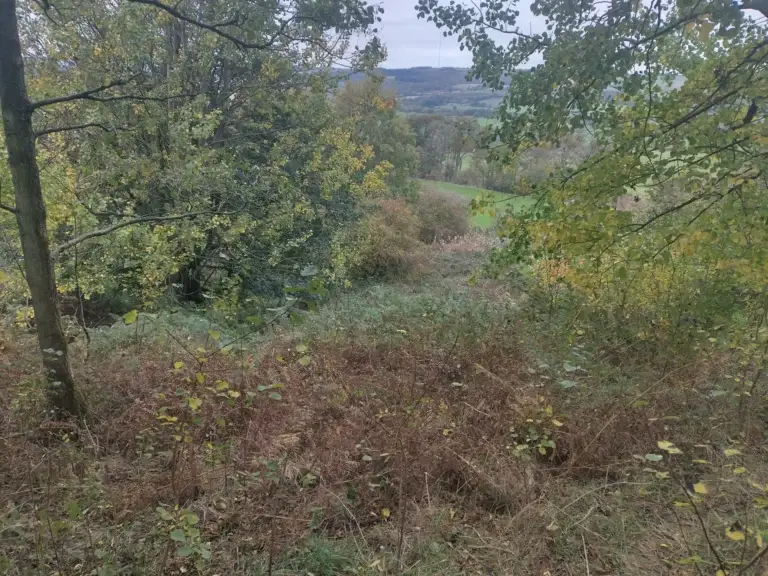
A big tree close to the house, a garden you are thinking of buying, or a site full of mature trees you are now responsible for: in each case it helps to know what condition the trees are in before you decide what to do. That is what a tree survey is for. If you are wondering what does a tree survey involve, the short answer is a careful look at your trees by someone qualified, followed by clear recommendations on how to manage them safely.
This guide walks through when a survey is worth having, what gets looked at, how to get ready for the visit and what you have at the end of it. We are DB Tree & Garden, a family-run team based in Sunderland with 40+ years of experience, and we carry out professional tree surveys and risk assessments for homes, businesses and development sites.
What a tree survey is for
Trees change slowly, and a lot of what matters about a tree is hard to judge from the kitchen window. A branch can look fine from the ground and still be weak. A tree that has always been there can start to lean, or the ground around it can change after building work or a storm. A tree survey is a way of getting a qualified view on the trees you are responsible for, rather than guessing.
The aim is simple. It answers questions such as:
- Is this tree in a safe condition for where it stands?
- Does anything about it need attention now?
- What work, if any, would keep it safe and healthy?
- Is there anything to keep an eye on in future?
A survey is about the condition of the tree and the risk it poses to people and property around it. It is not a quote for a job you have already decided on. You might come out of it with no work needed at all, or with a short list of jobs to consider. Either way, you have something to base your decision on. Our tree surveys and risk assessments give you clear recommendations for safe management, so you know where you stand.
Reasons you might want a tree survey
There is no single trigger for a survey. These are some of the situations where one can help.
A tree close to the house
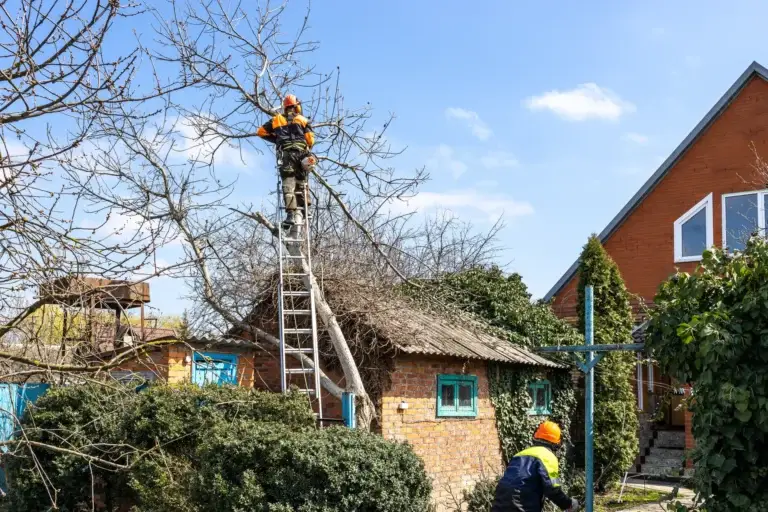
A large tree near a house, garage, conservatory or boundary wall is worth knowing about. If a limb came down, what would it land on? A survey looks at the tree with its surroundings in mind, so the advice reflects what is actually within reach of it.
Buying or taking on a property
If you are buying a house with mature trees, or you have just moved in, you may have no idea when the trees were last looked at. A survey gives you a starting point and helps you plan any work.
After a storm or a change you have noticed
Storm damage, a new lean, cracks, dead branches in the crown or fungus at the base are all reasons to get a tree looked at rather than wait.
Managed sites and development land
For site managers and facilities teams, trees on a business park, school, housing estate or development site are part of keeping the grounds safe for staff, residents and visitors. Our surveys and risk assessments cover businesses and development sites as well as homes, and RAMS are available on request for commercial work.
Getting ready for the survey visit
You do not need to do much before a survey, but a little preparation helps the visit go smoothly and makes sure nothing gets missed.
- Know which trees you mean. If there are several trees in the garden or on the site, have a think about which ones you want looked at, or whether you want all of them covered.
- Note what has worried you. A branch that dropped, a crack you spotted, mushrooms at the base, a lean that seems worse than before. Write it down so you can point it out.
- Take photos if you can. Pictures of anything that has changed, especially after a storm, are useful to show on the day.
- Clear the way. Make sure access routes are clear and any vehicles or obstacles are moved, so the trees and the ground around them can be seen properly.
- Mention anything about the site. On a commercial site, tell us about access, working hours or any site rules in the enquiry, so we can plan around them.
If the trees are on a boundary, it is worth knowing where the boundary runs before the visit. That way the recommendations you get can be clear about which trees are yours to manage. We will discuss any specific requirements at the time of booking, so you know what to expect before we arrive.
What gets looked at during a tree survey
A tree survey looks at the whole tree and the space around it, from the ground up. The points below give you an idea of the kind of things a careful inspection covers.
The base and the ground
The area where the trunk meets the ground can tell you a lot. Fungus, cracks in the soil, lifting ground or damage to the roots from digging or building work are all worth noting. So is anything that has changed around the tree, such as new paving, a driveway or a change in levels.
The trunk
The trunk is checked for splits, cavities, wounds, loose bark and any lean. A lean on its own does not mean a tree is unsafe, but a lean that has changed is a different matter.
The crown and branches
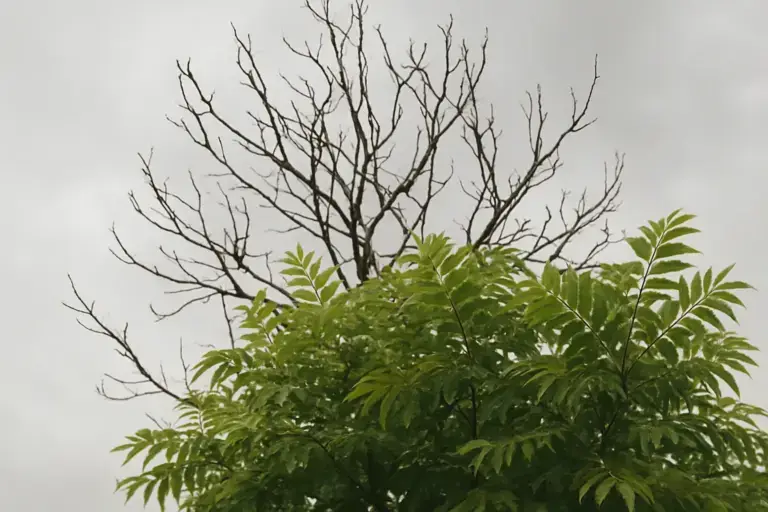
Up in the crown, the survey looks for dead wood, broken or hanging branches, weak joins between stems and how the leaves and growth look overall. Branches that rub, cross or overhang a roof, a path or a road are noted too.
What is around the tree
The same defect means something very different on a tree in the middle of a field and a tree next to a house, a school path or overhead cables. That is why the surroundings matter as much as the tree: buildings, walls, paths, roads, parking and anywhere people gather. Good recommendations take all of this into account.
What you get at the end of a tree survey
The point of a survey is what comes after it: clear recommendations for the safe management of your trees. Depending on what the survey finds, that could include:
- No work needed for now, with anything to keep an eye on pointed out to you.
- Pruning to deal with a weak, dead or overhanging branch.
- A crown reduction to improve safety, light levels and clearance while keeping the tree healthy and balanced.
- Felling, where a tree is dangerous, diseased or storm-damaged, carried out safely and in sections where needed.
- Stump grinding after felling, if you want the stump taken out rather than left on site.
With clear recommendations in hand, you can decide what to do and when. If work is needed, we carry out tree felling, pruning, crown reductions, storm damage response and stump grinding, and we can give you a free, no-obligation quote for it. You can read more on our tree surgery and hedge work page.
The recommendations are there so you can make an informed choice about your trees. If you have other questions about how we work, our FAQ page answers some of them.
Who carries out our tree surveys
A survey is only as good as the person doing it, so it is fair to ask who will be looking at your trees. At DB Tree & Garden, our work is carried out by a qualified, experienced team. Our operators hold NPTC and LANTRA certifications, we are fully insured, and we bring 40+ years of experience to every job.
Across Sunderland and the North East, we carry out tree surveys and risk assessments for homeowners, businesses and development sites. We work in Sunderland, Durham, Washington, Seaham, South Shields, Gateshead and Newcastle. We work tidily and safely, to a professional finish, and we turn up when we say we will.
For commercial sites
For property managers, councils, schools, housing developers and industrial sites, tree risk work sits alongside our grounds maintenance and site services. We can provide risk assessments and method statements (RAMS) for commercial work, and we can work around your access requirements and working times. If you manage several locations, you can find out more on our industries we serve page.
Whether it is a single tree by the house or a site with dozens of trees, the first step is the same: tell us what you have and what is worrying you, and we will discuss your needs with you.
Need a Trusted Tree Surgeon in Sunderland?
Get a no-obligation quote for tree work, hedge work, or grounds maintenance across the North East.